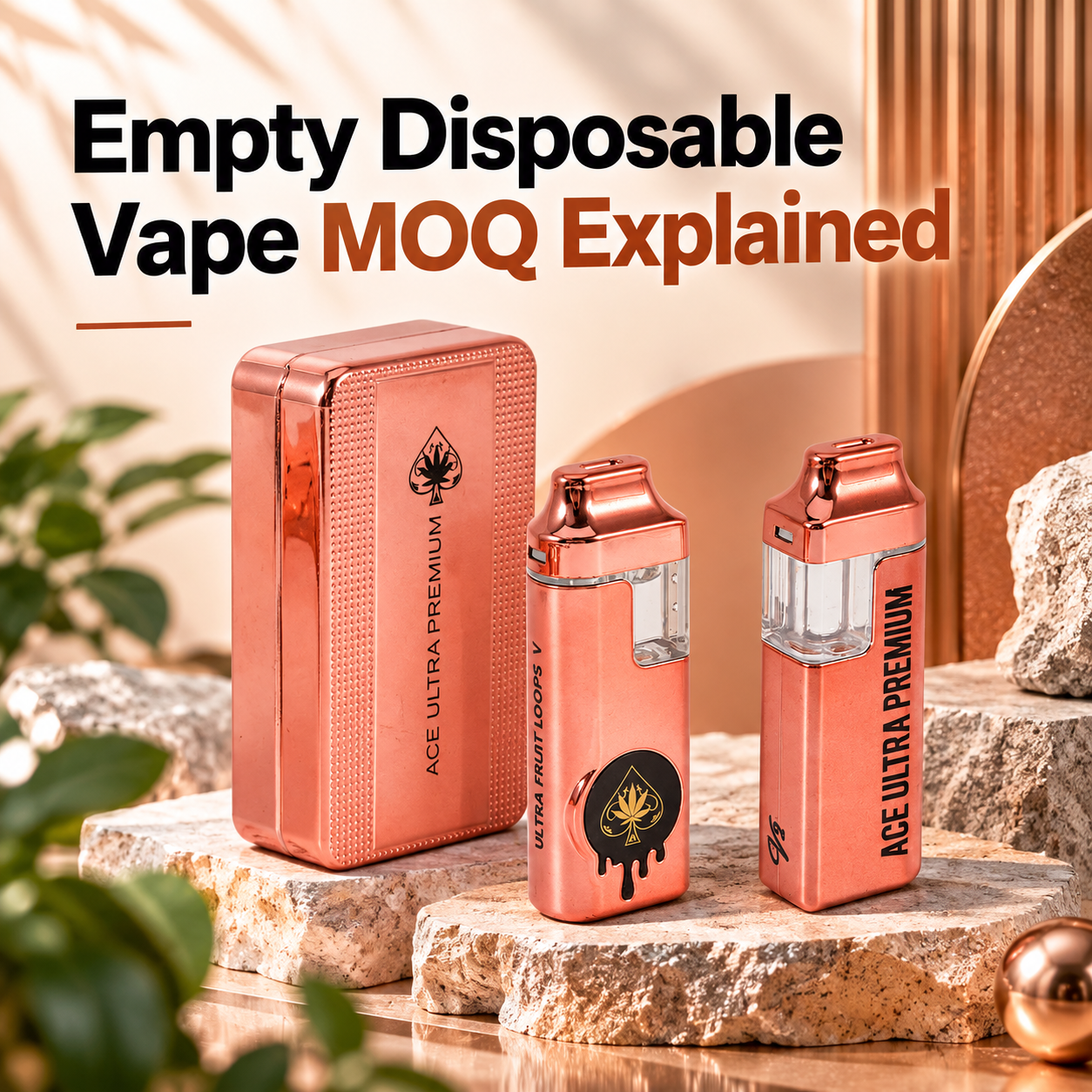
Empty Disposable Vape MOQ Explained: Wholesale, OEM & Custom Order Guide
When sourcing empty disposable vape hardware, one of the first questions wholesale buyers usually ask is: “What is your MOQ?”
When sourcing empty disposable vape hardware, one of the first questions wholesale buyers usually ask is:
“What is your MOQ?”
MOQ stands for Minimum Order Quantity—the smallest quantity a supplier is willing to accept for a particular product, configuration or customization project.
The definition is simple.
The actual purchasing decision is not.
There is no single universal MOQ for empty disposable vape hardware. Even when buying from the same supplier, the minimum quantity can change depending on:
For example, the MOQ for an existing warehouse product may be different from the MOQ for the same hardware with a custom logo.
Add a custom color, printed flavor name or custom box, and another minimum may apply.
That is why B2B buyers should not evaluate MOQ as one isolated number.
MOQ is the result of how the order must be produced, customized and fulfilled.
This guide explains the different types of empty disposable vape MOQ, why suppliers use minimum quantities, how MOQ affects pricing and inventory, and what wholesale buyers should confirm before placing an order.
MOQ means Minimum Order Quantity.
If a supplier lists:
MOQ: 100 pcs
it generally means the buyer must order at least 100 units under the conditions attached to that offer.
The important words are:
“under the conditions attached to that offer.”
For example:
100 pcs existing-stock MOQ
does not necessarily mean:
100 pcs custom-logo MOQ
or:
100 pcs custom-packaging MOQ.
Those may represent different procurement processes.
Before comparing supplier MOQs, ask:
Without these details, two MOQ numbers may not be directly comparable.
A common assumption is that suppliers use MOQ simply because they want buyers to purchase more units.
In reality, MOQ can reflect how manufacturing and fulfillment work.
Several factors can contribute to a minimum quantity.
Starting or changing a production run can involve fixed setup work.
This can include:
Producing a very small quantity can therefore be inefficient compared with running a planned production batch.
An empty disposable vape is assembled from multiple components.
Depending on the design, these may include:
Some components may have their own supplier minimums.
Therefore, the finished-device MOQ can partly depend on the component supply chain.
Adding a logo or other printed information may require:
The fixed work involved can make very small custom runs impractical.
Custom packaging is another common source of MOQ differences.
A printed box supplier may have a minimum production quantity independent of the hardware factory’s minimum.
This means:
Device MOQ and packaging MOQ are not necessarily the same.
Even a relatively small production batch requires:
Assembly → Inspection → Functional Testing → Packing
These processes involve labor and operating costs.
Existing inventory can avoid a new production run, but small stock orders still require:
Therefore, stock orders can also have minimum-order requirements.
Instead of asking only:
“What is the MOQ?”
B2B buyers should understand which type of MOQ applies.
Four common categories are particularly useful.
Stock MOQ applies to hardware that has already been manufactured and is available in inventory.
The production process has already occurred.
A simplified stock-order workflow looks like:
Existing Inventory
↓
Order Confirmation
↓
Picking
↓
Checking
↓
Packing
↓
Shipping
Because the supplier does not need to start a new production run for that order, stock MOQ can sometimes be more flexible than customized production MOQ.
Stock orders can be useful for:
However, buyers are limited to what is actually available.
That can include restrictions on:
Production MOQ applies when the supplier needs to manufacture a new batch.
The order now involves factors such as:
As a result, the minimum quantity can be different from existing stock.
A product being available at a low MOQ from a warehouse does not mean the factory can produce a new batch at the same minimum.
OEM orders add branding to standard hardware.
This can include:
Even when the underlying device remains unchanged, customization creates additional production steps.
A typical process may look like:
Hardware Selection
↓
Artwork
↓
Artwork Approval
↓
Printing Setup
↓
Production / Processing
↓
QC
↓
Packing
Therefore:
A low stock MOQ should never be assumed to apply automatically to a logo-customized order.
Always ask for the MOQ for the exact branding requirement.
Full customization goes beyond printing a logo on an existing product.
Depending on the project, it may involve:
The more the product moves away from a standard existing configuration, the more production requirements can change.
Full-custom projects therefore need to be quoted according to the actual design rather than a generic website MOQ.
This is one of the most common sources of confusion.
A buyer sees:
MOQ: 100 pcs
and then asks for a logo.
The supplier responds with a higher minimum.
Why?
Because these can be two different orders.
Existing Product → Pick → Check → Pack → Ship
Product Selection → Artwork → Approval → Printing → Processing → QC → Pack → Ship
The first uses finished inventory.
The second creates customized inventory for a specific customer.
Therefore, when comparing prices and MOQs, always identify whether the quotation refers to:
standard stock
or:
customized production.
From the buyer’s perspective, adding a logo may appear simple.
From a production perspective, it can create another workflow.
Depending on the printing method, customization can require:
These fixed processes have to be performed whether the order contains a relatively small or large number of units.
This is one reason logo customization can have a different minimum from existing inventory.
Suppose a hardware supplier can produce your required device quantity.
That does not automatically mean the packaging supplier can produce the same quantity economically.
Custom boxes can involve:
As a result, a project may have multiple minimums:
Hardware MOQ
Logo MOQ
Packaging MOQ
Custom Component MOQ
The final project must account for all of them.
A useful B2B concept is:
The practical project MOQ can be determined by the highest minimum among the required custom elements.
This is why packaging should be discussed early rather than after the hardware order has already been negotiated.
A supplier may offer multiple empty disposable vape models with different minimum quantities.
This is normal.
A 2g-class device, 3g-class device and dual-chamber device may use different:
Inventory levels can also differ.
One model may already have substantial stock.
Another may require new production.
Therefore, instead of asking:
“What is your vape MOQ?”
ask:
“What is the MOQ for this exact model, configuration and customization?”
That question produces a much more useful answer.
It can.
Color is another area where buyers should clarify how MOQ is calculated.
Suppose a buyer wants 1,000 units in five colors.
That could mean:
200 units × 5 colors
But the supplier’s requirement might apply:
These are very different conditions.
For example, a standard color already in inventory may have more flexibility than a newly customized shell color requiring a dedicated production run.
Do not assume that meeting the total order MOQ automatically satisfies every color requirement.
Consider a hypothetical order:
Total order:
1,000 pcs
Now imagine the production requirement is:
500 pcs per SKU
The buyer has reached 1,000 units in total but has not met the hypothetical minimum for each individual SKU.
This illustrates an important procurement principle:
Total order quantity and per-SKU MOQ are not necessarily the same.
Before placing an order, confirm whether the minimum applies to:
Sometimes, but not always.
The answer depends on the supplier, stock status and customization.
For existing inventory, mixing available colors may be more practical because the products have already been manufactured.
For new production, the supplier may have a minimum per color because each color requires its own materials or production arrangement.
Therefore, ask:
“Does the MOQ apply per model, per color, per print design or to the combined order?”
Do not assume color mixing is available until it has been confirmed.
Local inventory has already moved through much of the production and supply-chain process.
Typically, the hardware has already been:
Manufactured
↓
Inspected
↓
Packed
↓
Transported
↓
Warehoused
A buyer ordering available local stock does not need to initiate a completely new production run.
This can make local inventory useful for:
However, there is a tradeoff.
Local stock generally offers less customization flexibility because the product has already been manufactured.
So buyers are often choosing between:
Inventory Flexibility
and:
Customization Flexibility
depending on the project.
Lower MOQ is not automatically better.
Higher MOQ is not automatically better either.
They solve different purchasing problems.
| Factor | Lower MOQ | Higher MOQ |
|---|---|---|
| Initial cash commitment | Lower | Higher |
| Market testing | More flexible | Less flexible |
| Inventory exposure | Lower | Higher |
| Unit price | May be higher | May be lower |
| Customization | May be limited | Often more practical |
| SKU testing | Easier | Requires stronger demand confidence |
| Reorder frequency | Potentially higher | Potentially lower |
| Forecasting requirement | Lower | Higher |
The correct MOQ is therefore not necessarily the smallest number available.
The right MOQ is the quantity that fits your demand, cash flow, customization requirements and inventory plan.
It can.
Larger production quantities can sometimes improve unit economics because certain fixed costs are distributed across more units.
Potential efficiencies include:
But the relationship is not automatic.
Unit price also depends on the hardware itself, including:
Therefore, do not assume that doubling the order quantity will reduce the unit price by a predictable percentage.
Ask for actual quantity-based quotations.
A lower unit price can be attractive.
But unit price is only one part of the procurement decision.
Consider two hypothetical options:
Lower MOQ
Higher unit price
Lower total inventory commitment
Higher MOQ
Lower unit price
Higher total inventory commitment
Option B may look cheaper when comparing only the cost per unit.
But if part of the inventory remains unsold, the real business result can be very different.
A better decision framework is:
Unit Price + MOQ + Total Investment + Inventory Risk
rather than:
Lowest Unit Price Wins
There is no universal number.
The appropriate quantity depends on how much information you already have about the product and market.
If you have not tested the hardware or market demand, the priority should usually be validation.
The process can begin with:
Samples → Testing → Trial Order
rather than immediately maximizing order quantity.
If a product already has stable sales history, a larger order may be easier to justify.
You have more information about:
A brand with an established product may be more willing to commit to a larger production quantity in exchange for:
The general principle is:
Order quantity should increase after product and market validation—not simply because a larger MOQ offers a lower unit price.
These are three different stages.
Samples are primarily for product evaluation.
For empty disposable hardware, testing may include:
A sample is not primarily an inventory purchase.
It is a testing tool.
A trial order evaluates the product in a more realistic business environment.
It can help answer:
A bulk order becomes more reasonable after the hardware and demand have been validated.
A useful purchasing sequence is:
Sample → Hardware Test → Trial Order → Market Validation → Bulk Order
This is generally more informative than:
Sample Looks Good → Maximum Order
Suppose a larger order reduces the unit price.
That looks attractive.
But what happens if:
The unsold units still have a cost.
This is why:
A lower unit price does not always mean a lower business cost.
Inventory risk should be included in the MOQ decision.
Inventory ties up working capital.
As order quantity increases, more cash can remain committed to products until those products are sold.
That can affect the budget available for:
MOQ is therefore not only a supplier condition.
It is simultaneously a:
Procurement Decision
Inventory Decision
Cash-Flow Decision
Wholesale buyers should evaluate all three.
MOQ discussions are usually more productive when the buyer changes the structure of the order rather than simply asking:
“Can you lower your MOQ?”
Several approaches can help.
If the objective is market testing rather than customization, existing inventory may provide a more practical starting point.
Using:
can simplify the order compared with a full custom project.
Instead of dividing an order across many models and colors, concentrate volume on the products you most want to test.
This reduces SKU fragmentation.
If color mixing is available, it may create more flexibility.
But confirm this rather than assuming it.
A buyer does not always need full custom packaging for the first hardware evaluation.
Test the hardware first.
Branding can follow after the product has been validated.
Instead of negotiating a large OEM project immediately, ask whether an existing-stock trial order is available.
A supplier may be able to plan production more effectively when the buyer can provide realistic forecasts and repeat-order expectations.
Do not promise unrealistic volumes simply to obtain a lower MOQ.
Accurate purchasing information is more useful for both sides.
Before confirming an empty disposable vape order, ask:
These questions are much more useful than asking only:
“What is your lowest MOQ?”
MOQ without a specific model and configuration can be meaningless.
Ask for the exact product.
Existing inventory and customized production follow different workflows.
Do not assume their minimums are identical.
The requirement may apply per SKU.
Always confirm.
An order may meet the total quantity while failing a minimum required for each custom color.
The hardware quantity may be acceptable while the custom box quantity is not.
Treat packaging as a separate supply-chain component.
Calculate total investment and inventory risk first.
A lower unit price does not compensate for hardware that does not work with your formulation or process.
Validate before scaling.
Splitting a small order across too many models and colors can create fragmented inventory and complicate MOQ requirements.
Inventory is not free simply because the unit price is low.
Consider how long the capital may remain tied up.
Before production, confirm that the approved:
will be used for the bulk order.
Use this checklist before confirming a wholesale or OEM order.
| Check | What to Confirm |
|---|---|
| Product model | Exact hardware |
| Configuration | Capacity / battery / heating system |
| Stock status | Existing stock or new production |
| Stock MOQ | Minimum for available inventory |
| Production MOQ | Minimum for new manufacturing |
| SKU MOQ | Per SKU or total order |
| Color MOQ | Per color or combined |
| Logo MOQ | Custom-print minimum |
| Packaging MOQ | Separate packaging requirement |
| Mixed colors | Allowed or not |
| Samples | Available before bulk order |
| Trial order | Available before scaling |
| Unit price | Price at relevant quantity levels |
| Total investment | Quantity × landed unit cost |
| Lead time | Stock vs production |
| QC | Production matches approved specification |
| Inventory plan | Demand + lead time + safety stock |
The purpose is not necessarily to find the supplier with the lowest MOQ.
It is to understand exactly what you are committing to.
MOQ means Minimum Order Quantity.
It is the smallest quantity a supplier will accept for a particular product, production run or customization requirement.
There is no universal MOQ.
It can depend on:
Ask for the MOQ of the exact product and project.
MOQs can reflect production setup, component purchasing, printing, packaging, labor, QC and warehouse fulfillment requirements.
It can be.
Existing inventory does not require the supplier to start a new customized production run.
However, actual MOQ depends on the supplier and product.
Potentially.
Existing inventory or standard products can sometimes offer more flexibility than new OEM production.
The exact minimum should be confirmed for the model you want.
It depends on the order.
Existing stock may offer different possibilities from new production.
Ask whether MOQ applies per order, model, SKU, color or design.
Either structure is possible.
Never assume.
Confirm how the supplier calculates the minimum before placing the order.
It can because custom printing introduces additional setup and production requirements.
Ask for the specific logo-printing MOQ.
It can.
Packaging manufacturers may have production minimums independent of the hardware MOQ.
Sample policies are normally separate from production MOQ policies.
Ask whether the supplier provides samples for hardware and formulation testing before a bulk order.
A larger quantity can sometimes improve unit economics, but there is no universal pricing formula.
Compare actual quotations rather than assuming a fixed discount.
Choose a quantity based on:
For an untested product, samples and a trial order can provide useful information before scaling.
Sometimes the order can be restructured by choosing stock products, reducing customization, using fewer SKUs or adjusting colors.
Whether the actual MOQ can change depends on the product and production requirements.
It can be useful because the products have already been manufactured and positioned in the regional warehouse.
However, inventory selection and customization options may be more limited.
MOQ looks like a simple number on a quotation.
For a wholesale buyer, it represents much more.
The actual order quantity can be influenced by:
Product + Stock Status + SKU + Color + Logo + Packaging + Customization + Production Requirements
And the correct purchasing quantity depends on:
Product Validation + Market Demand + Unit Economics + Cash Flow + Inventory Risk
That is why the lowest MOQ is not automatically the best deal.
Likewise, the lowest unit price is not automatically the lowest-cost business decision.
For a new product, a more controlled purchasing path is:
Sample
↓
Hardware & Formulation Test
↓
Trial Order
↓
Market Validation
↓
Bulk Order
For an established product, the process can evolve into:
Sales Forecast
↓
MOQ Selection
↓
Price Negotiation
↓
Production
↓
Quality Control
↓
Inventory Replenishment
Before placing an empty disposable vape wholesale order, do not ask only:
“What is your MOQ?”
Ask:
“What is the MOQ for this exact model, configuration, color and customization—and what part of the order determines that minimum?”
That question gives you the information needed to compare suppliers, control inventory risk and make a better B2B purchasing decision.
Get A Free Quote
Related blogs

Empty Disposable Vape MOQ Explained: Wholesale, OEM & Custom Order Guide
When sourcing empty disposable vape hardware, one of the first questions wholesale buyers usually ask is: “What is your MOQ?”

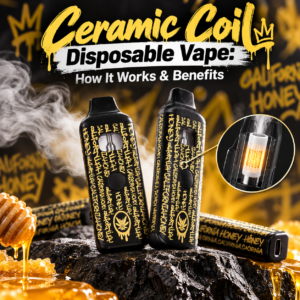
Ceramic Coil Disposable Vape Explained: How It Works, Benefits & B2B Buying Guide
Ceramic coil is one of the most common terms buyers encounter when sourcing empty disposable vape hardware. But what does

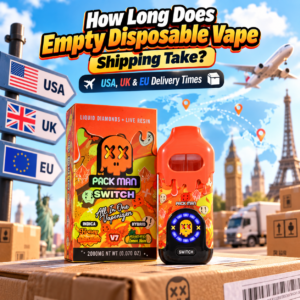
How Long Does Empty Disposable Vape Shipping Take?
For wholesale buyers, shipping time is more than a logistics question. It affects inventory planning, product launches, cash flow, reorder
You must be 18 years of age or older to view page. Please verify your age to enter.
Your access is restricted because of your age.
Hello, please contact us if you have any questions!
Whatsapp : +1-713-363-1015
Telegram : @Amy99812
Email : chengstella120@gmail.com
iMessage: +1-713-363-1015